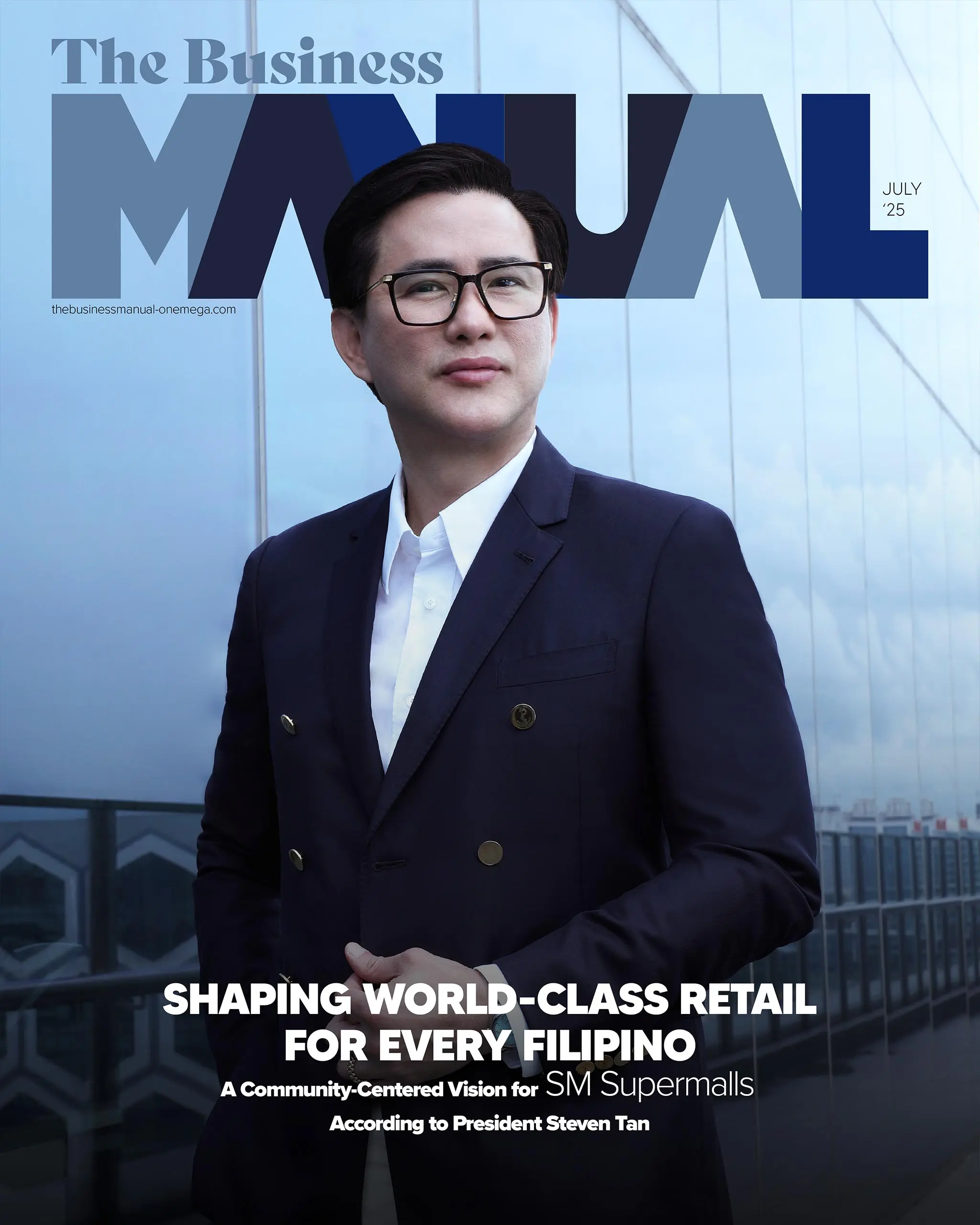
Shaping World-Class Retail for Every Filipino: A Community-Centered Vision for SM Supermalls


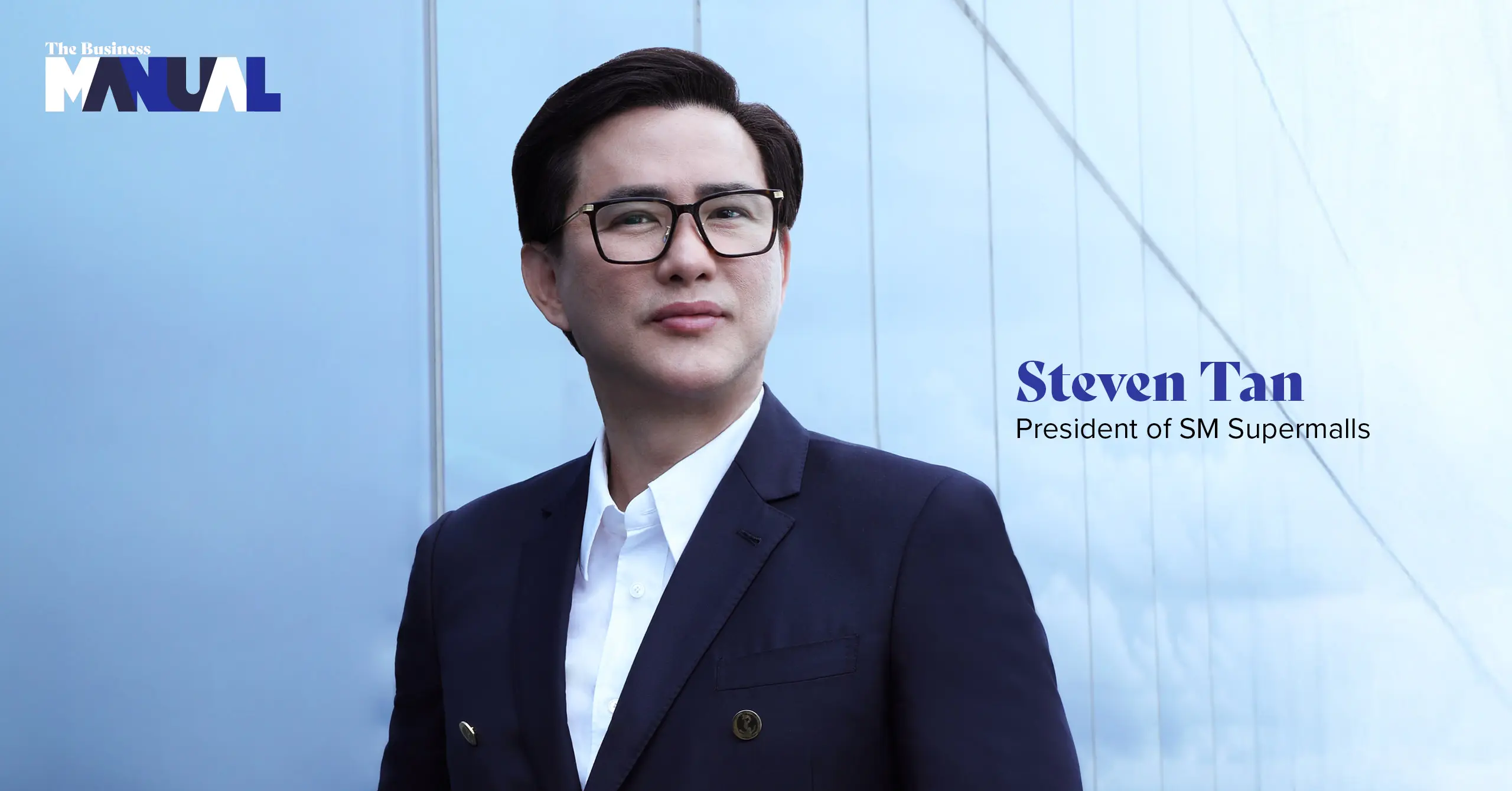
SM Supermalls President, Steven Tan, shares how agility is the key to adapting to changing consumers in the retail industry.
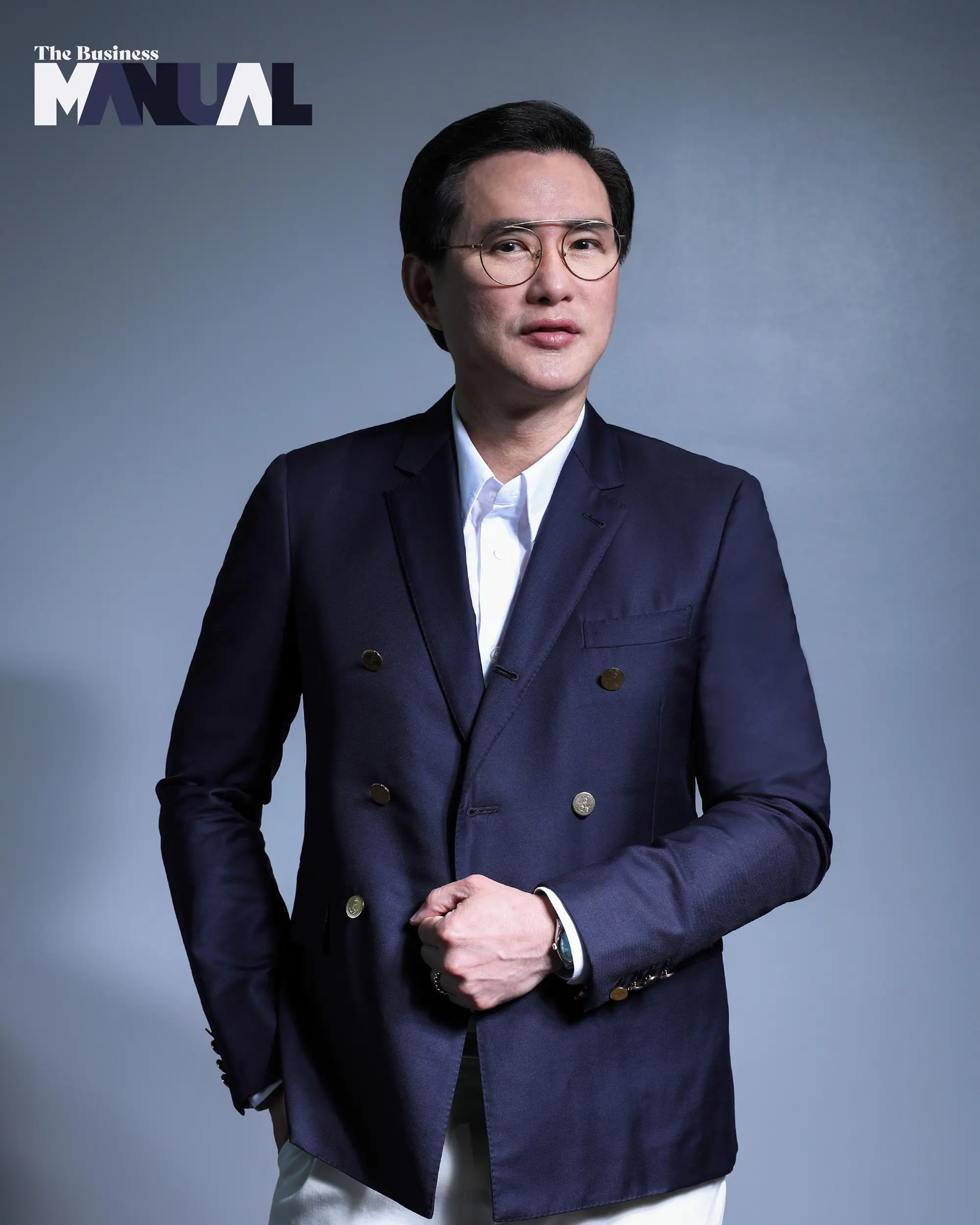
Since Steven Tan became President of SM Supermalls, he has led the company through extraordinary times. Appointed in 2020, just before the pandemic broke out, he was at the helm when lockdown forced retail to a halt. Then with the subsequent rise of e-commerce, he faced the challenge online shopping posed to the entire industry. And yet, through all these challenges, SM Supermalls remains as dominant as it has ever been—even expanding to build nine more malls that are currently under construction. One thing is sure: it has achieved this feat not by standing still. Steven Tan’s leadership has transformed the 71-year-old company into an agile giant, constantly adapting to changing consumers while transforming itself for the future.
In the ever-evolving world of retail, few leaders have navigated disruption, digitalization, and rapid expansion as seamlessly as Steven Tan. Leading 88 malls in the Philippines and 8 more in China, Steven is at the forefront of a transformation that has redefined the mall experience—not just as a space for commerce, but as a cornerstone of Filipino community life.
From reshaping retail spaces to embedding sustainability and empowering small entrepreneurs, Tan’s journey offers powerful insights for leaders across industries. The Business Manual spoke to Steven Tan in an interview where he shared five pivotal business lessons that continue to guide his leadership at one of Southeast Asia’s most iconic retail institutions.
1. Prepare for the Future—Even When the Present Looks Bright
The short answer to how Steven Tan has taken the behemoth that is SM Supermalls–the house that built the SM conglomerate–and transformed it to respond to a changing market is this: He was prepared.
In a matter-of-fact tone, Steven tells us that SM leadership saw the change in retail long before it began in the Philippines. They were able to do so because that change had first happened in China, where SM runs eight shopping centers.
“We saw that transformation happening early, when e-commerce was starting to get traction. We saw that happening in China, therefore we prepared for it… Around 2005, my boss, Mr. Hans Sy, told me, ‘Steven, we have to prepare for what’s to come.’”
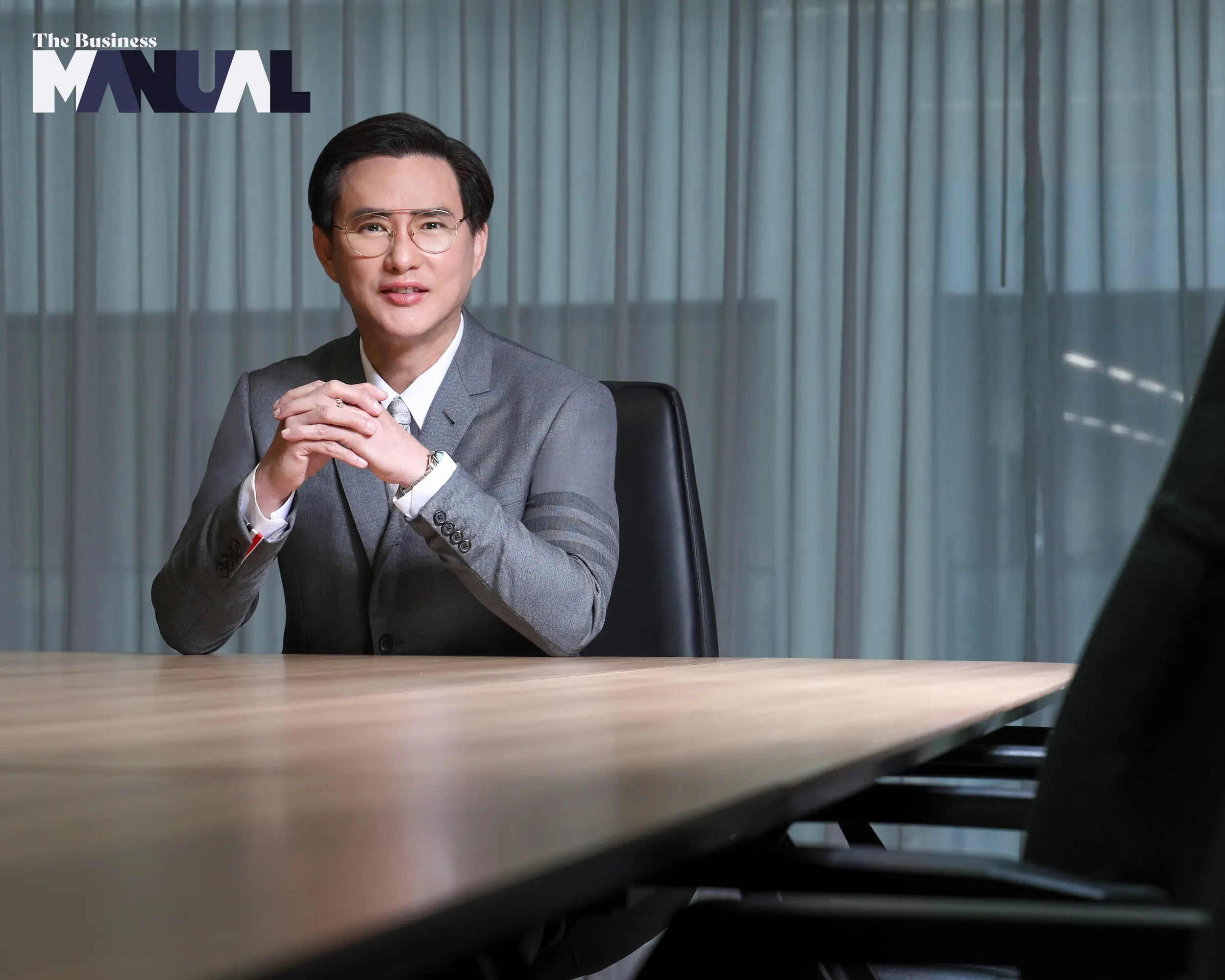
This was a time when the mall business was exploding in the Philippines, shortly after Steven joined the company in 2004. SM Megamall was the retail center of Manila, and in 2006, SM Supermalls opened the largest mall in the country, Mall of Asia. The company was on a bull run.
Even during these times of plenty, Steven Tan received a lesson that would anchor his approach to business: Never be complacent. As SM’s flagship malls were performing exceptionally, he looked beyond the success of the moment and prepared for inevitable changes in the landscape.
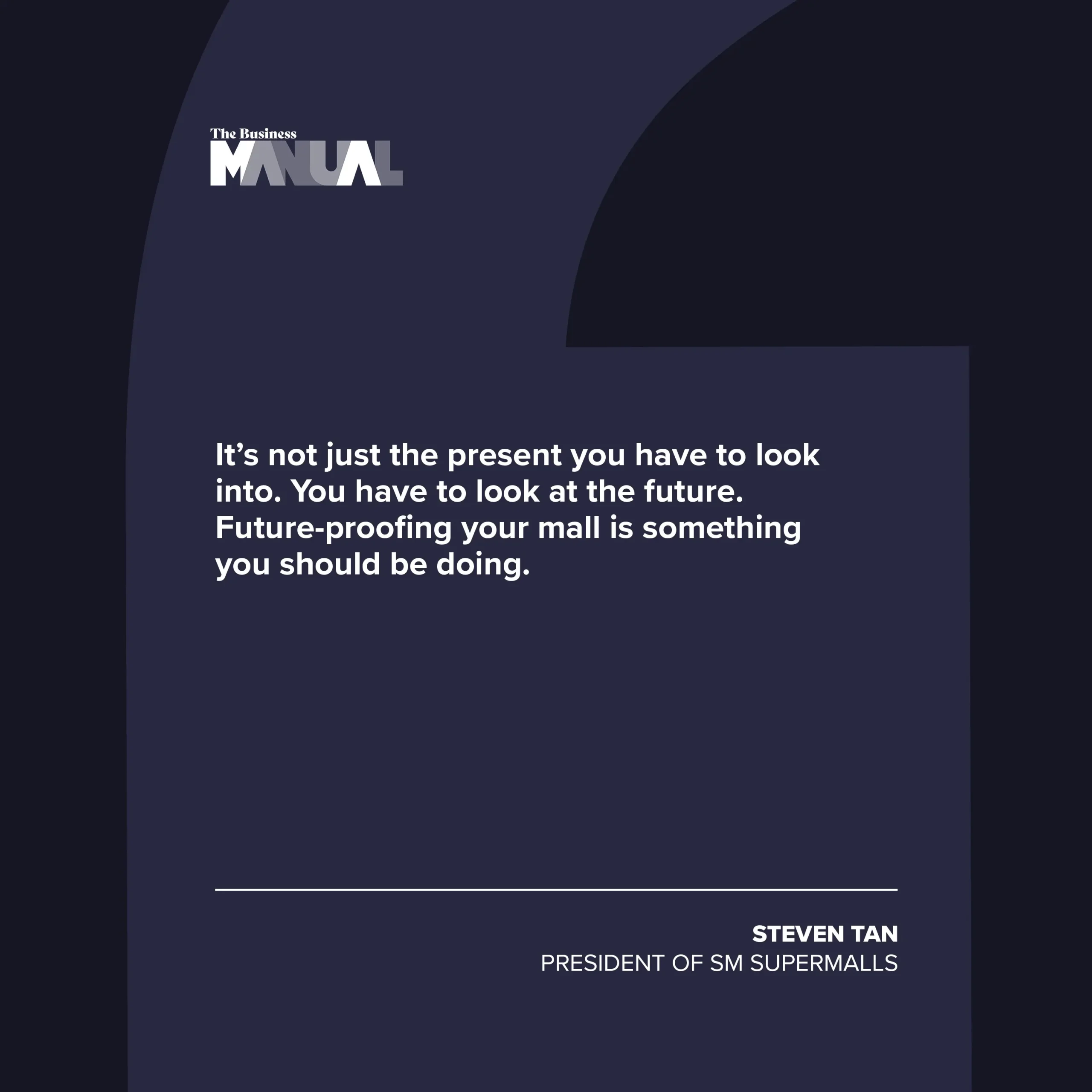
Steven shares,”We were doing so well, but it’s not just the present that you have to look into. You have to look at the future.”
The long answer to how SM Supermalls has been transforming is a long list of oftentimes small and sometimes large things. Recognizing the rise of e-commerce, Steven led a shift in SM’s model—from almost pure retail to a diversified, lifestyle-oriented mix. Today, food and beverage establishments make up over 30% of the mall’s tenant mix, from just 5%. Through the use of AI and digital tools, it can now better reach customers–and it improves its own operations at the same time.
More importantly, Steven led a shift to turn SM malls into lifestyle hubs with fitness gyms, pickleball courts, and even a football pitch in SM Mall of Asia. The beloved Filipino “malling” experience, which once centered around shopping, would grow and expand to become a space for families and communities to gather for both small celebrations and large events.
2. Be Agile—or Be Left Behind
For a company as large as SM, agility might seem counterintuitive. But for Steven Tan, it’s non-negotiable. He stresses the importance of being quick to respond to changing consumer behavior, particularly among the youth.
“The downfall of any big business is not to be able to be agile,” he says. “Put your ears to the ground and know when this shift is happening and how it is happening.”-

Whether it’s experimenting with new tenant concepts, updating event programming, or adopting new digital tools, Steven promotes a culture of fast learning and faster adaptation. He encourages leaders to constantly listen to the market and adjust strategies in real-time.
“I think agility is the key here,” he says. “You have to be quick. Especially nowadays, preferences have been shifting at the speed of light.”
3. Let Purpose Drive Innovation
With the business landscape changing so much because of technological innovation, many businessmen and entrepreneurs pursue buzzwords like innovation, disruption and AI adoption.
Steven Tan is quick to demystify this approach. For him, it’s not about innovation itself, or innovation for its own sake. It’s about purpose. It’s about solving real problems and improving operational efficiency. And it’s focused on the customer.
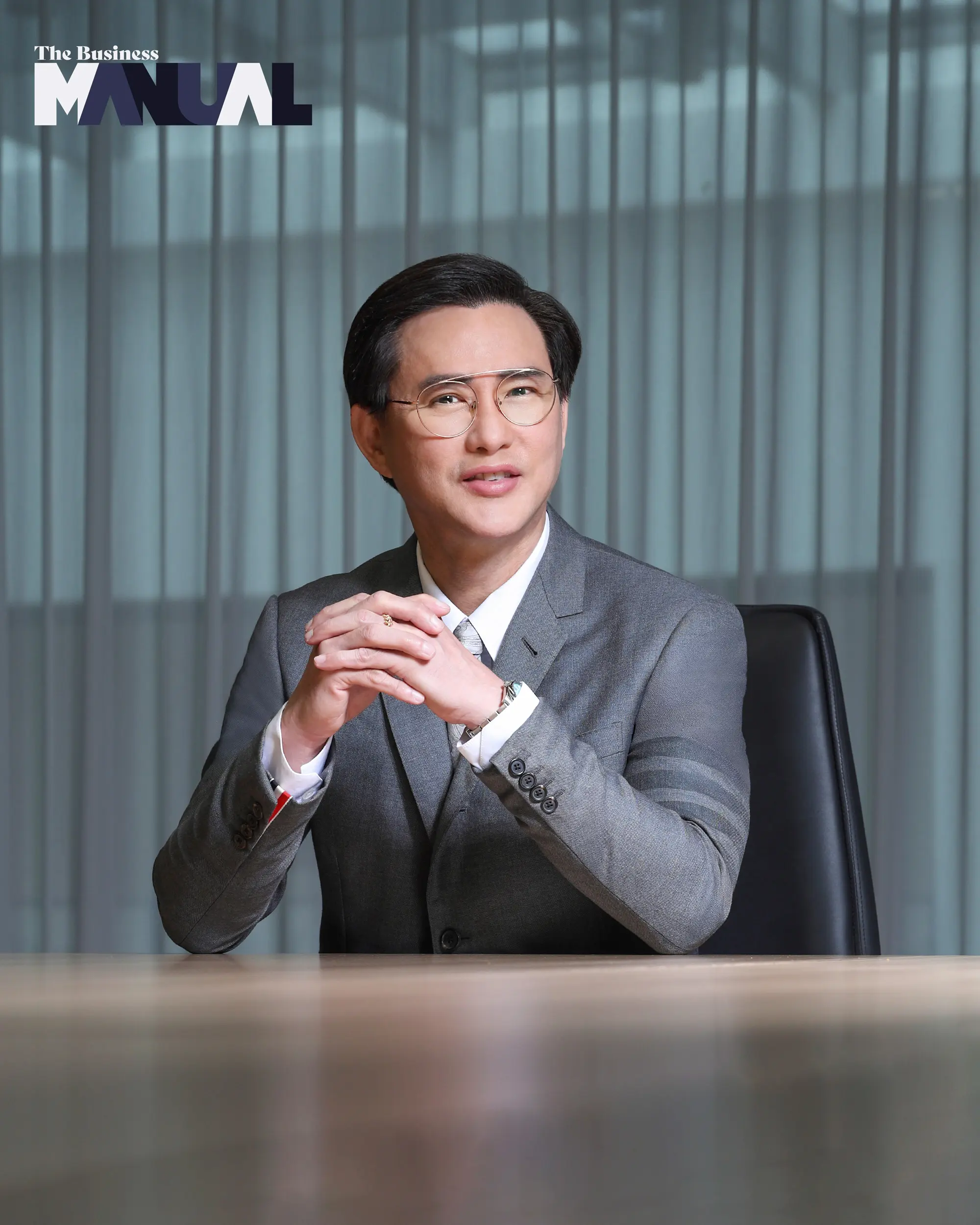
For Steven, technology and the latest innovations are subservient to purpose. Whether it’s AI-assisted cooling systems, behavior-based couponing, or mobile-based customer engagement, SM’s use of technology is rooted in clear, measurable goals.
“AI or digital transformation without any purpose is nothing,” he explains. “It has to have an objective, and it has to have a return.”
With this said, he encourages businesses to adopt new technologies, saying, “Embrace AI. Embracing digital transformation is something that every company should do. But first, you have to have an objective. How will that affect your business? How will that make you become more efficient?”

Internally, SM uses tech not just for marketing, but for optimizing backend systems—from electricity usage to customer traffic analytics—proving that true innovation happens quietly but powerfully behind the scenes.
4. Burn the Template, Design for Each Community
With purpose at the forefront of SM Supermalls’ business, gone are the days when their malls followed a uniform blueprint. Today, each mall is designed to reflect the needs and aspirations of its community, as well as its local culture.
“No shopping center is the same anymore,” Steven says. “You cannot just be a cookie cutter. You really have to adapt to the local needs and preferences.”
You can see these differences in SM malls around the country. In SM Laoag, its architecture draws inspiration from the sand dunes of Ilocos. In Santa Rosa, Laguna, the new mall features an enclosed one-hectare park—blending nature with commerce in an indoor setting. This localized approach has helped SM maintain deep cultural relevance while introducing world-class retail environments.
More importantly, this commitment to local communities isn’t just skin deep. SM malls serve the communities where they are present in practical and profound ways.
Each SM mall is devoted to sustainability. Currently more than half of SM Supermalls’ energy needs are powered by rooftop solar panels. And by 2030, 100% of all SM malls will be solar-powered.
Each SM mall is also uniquely created to answer local needs. Steven gives SM Marikina and SM Masinag as examples.
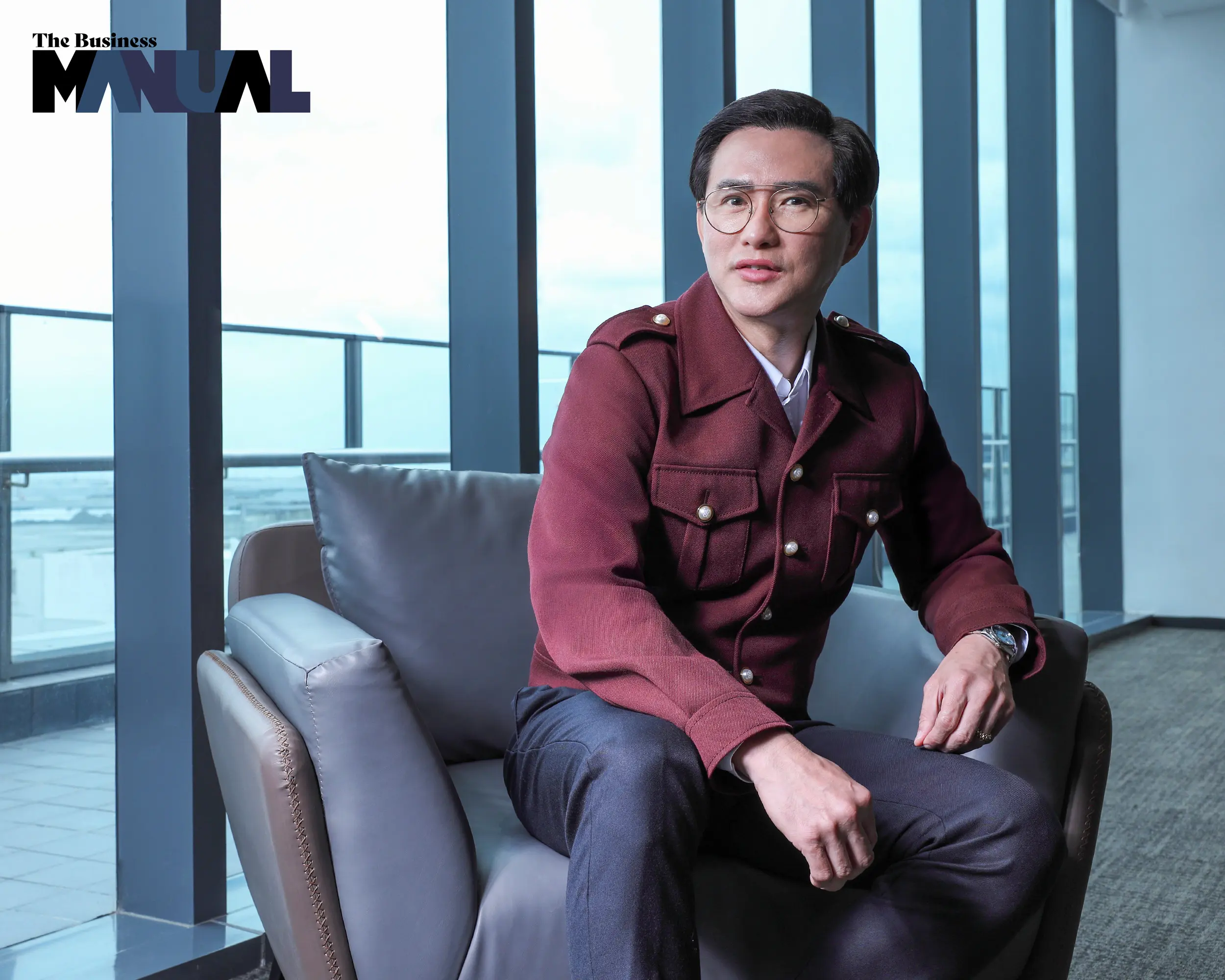
He says, “SM Marikina, if you look at the mall, it’s built on stilts. Why? Because it’s always flooded in that area. So we do not want to add to the flooding in that area.”
Meanwhile in flood-prone Masinag, SM has built a water catchment basin that has a capacity of 17,681 cubic meters (equivalent to seven Olympic-sized swimming pools), which aids the community in disaster resilience.
“When it rains heavily or there’s a typhoon,” Steven continues, “it collects rainwater for as long as five days. So it really helps the community around us. There’s a testament that says after we opened Masinag, it never floods anymore in the area. So it’s not just for our own [interests], but also for the community around us.”
Whether through building flood-resilient malls, expanding solar energy use, or creating employment through expansion, Steven Tan stays grounded in a singular mission: to do business with purpose.
5. Empower People—Inside and Outside the Organization
Delivering on SM’s purpose would not be possible without empowering people–both those inside and outside the organization.
Externally, SM has had a longstanding commitment to MSMEs (micro, small, and medium enterprises). Even though large clothing retail brands or international restaurant chains may take the lion’s share of attention, MSMEs comprise the majority of tenants in SM malls.
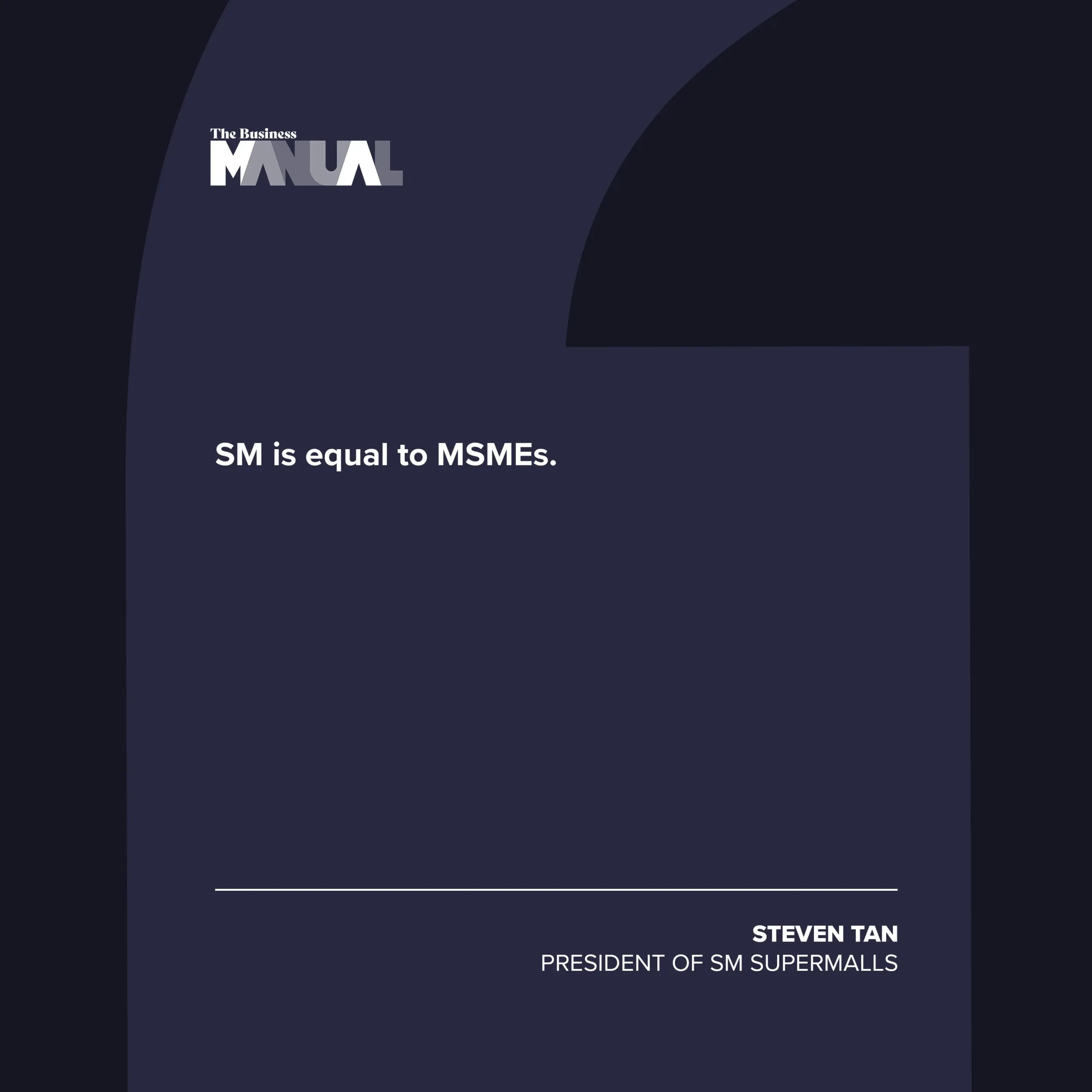
In no uncertain terms, Steven Tan declares, “SM is equal to MSMEs.”
Case in point: 75% of SM’s tenants are MSMEs. Recognizing how important the success of these MSMEs is to the success of SM, the company goes to great lengths to empower and support these businesses, commonly kiosks, food stalls or locally grown brands. To nurture new players, SM runs a startup program that offers rent-free space for six months to first-time entrepreneurs.
Acknowledging how supporting MSMEs is a win-win for everyone, Steven says, “We believe this country will thrive if everybody starts doing business.”
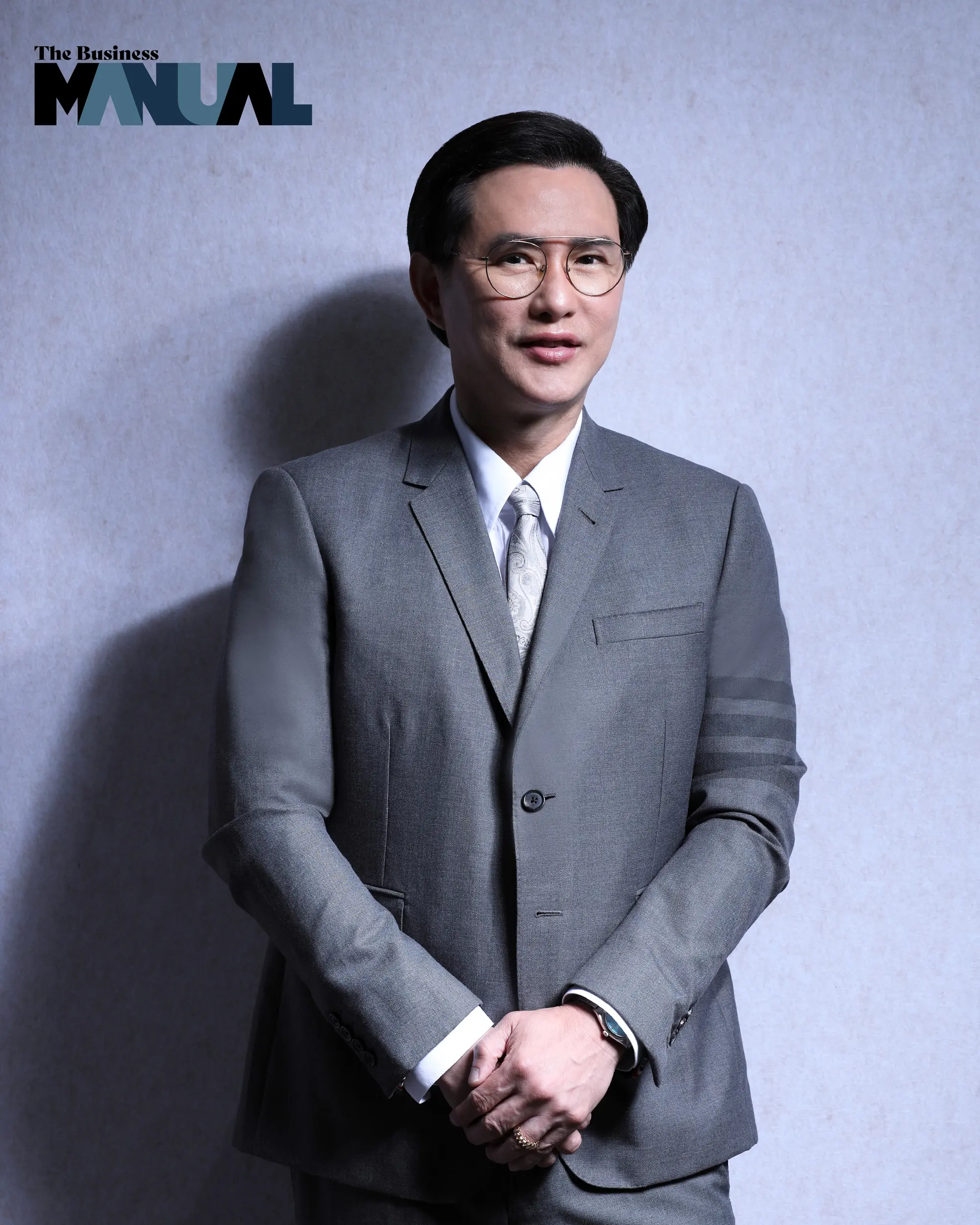
Internally, Steven Tan is just as focused on his people. He emphasizes leading by example, resolving conflict through communication, and fostering a shared vision within the organization.
“You have to set the example,” he says. “You walk the talk. You cannot just be giving instructions here and there. Leadership is encouraging your whole team to go in the same direction as you are.”
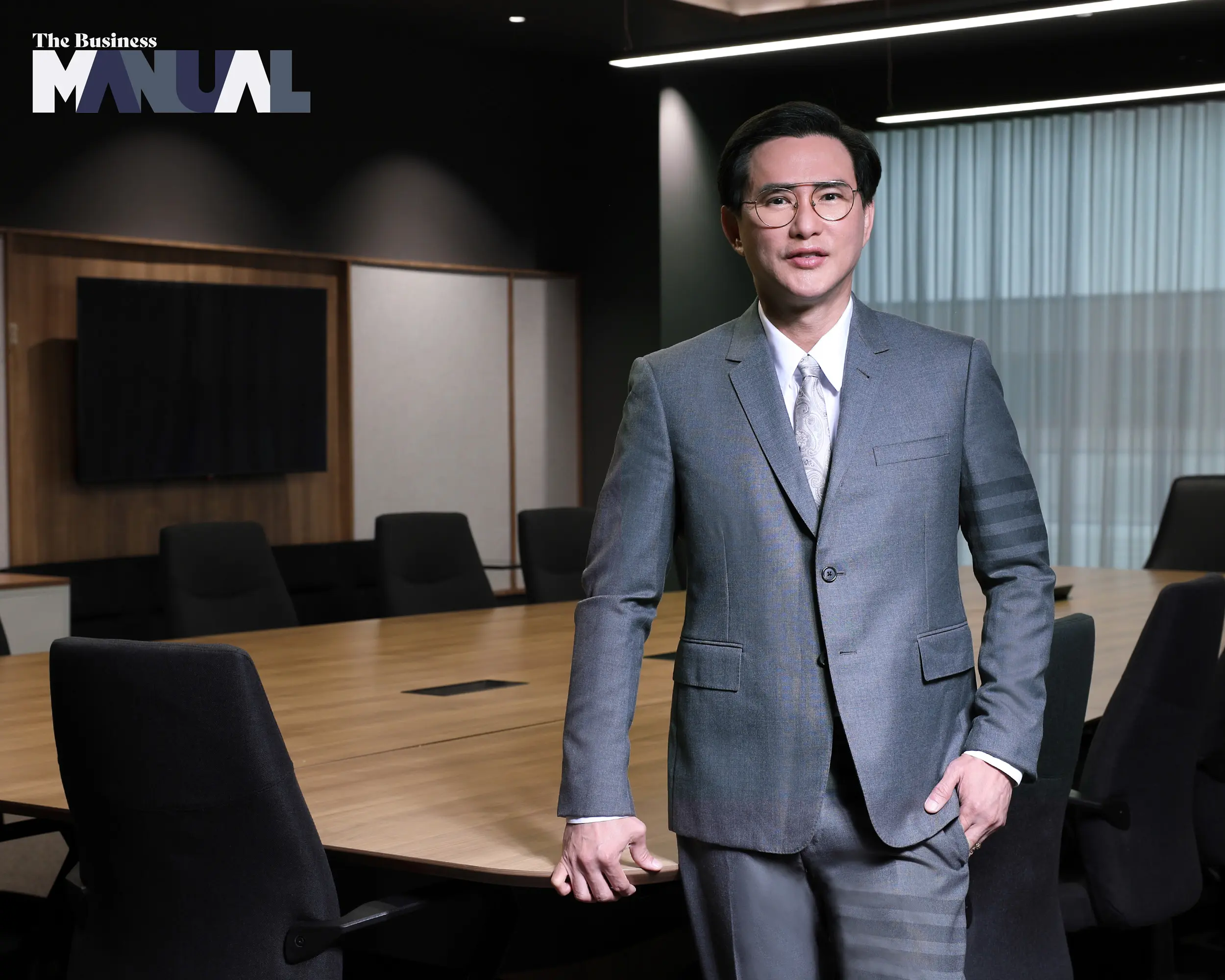
This type of leadership by example was visible during the pandemic and through the many natural disasters that followed. During such times, Steven personally led relief efforts, demonstrating his belief that leadership is about showing up and stepping up. It’s about the same leadership he displays in navigating the nimble giant that is SM Supermalls, taking swift action and grabbing the initiative.
Purpose-Driven Transformation
Transformation is no easy task, nor is navigating a market leader through a period of change. At the helm of SM Supermalls, Steven Tan has maintained market dominance and ensured a future of leadership for the company. His brand of leadership is one that blends foresight with strategy, purpose with innovation, and growth with responsibility. His lessons—on agility, purpose, and dedication to consumers and their community—serve not only as guiding principles for the future of retail but as a playbook for modern leadership.
For entrepreneurs and aspiring changemakers, Steven offers this final advice: “Be quick to adapt. No matter how big or small you are, agility is key.”
Text VINCENT SALES
Photography CYRUS PANGANIBAN assisted by MICHEL ANGELO PABON
Videography OMAR VILLANUEVA assisted by CRUZ
Art Direction ANDREA SANGCO
Sittings Editors JILL RADOVAN
Makeup Artist TWINKLE BERNARDO
Hairstylist ANGELI ALFONSO
Shoot Coordination TONI MENDOZA Shot on Location SM SUPERMALLS HEAD OFFICE
More From Cover