Why Should Businesses and Policymakers Prioritize the Filipino Family?


There is a need for systems and products that do not force families to behave as individuals and are compatible with the way they live.
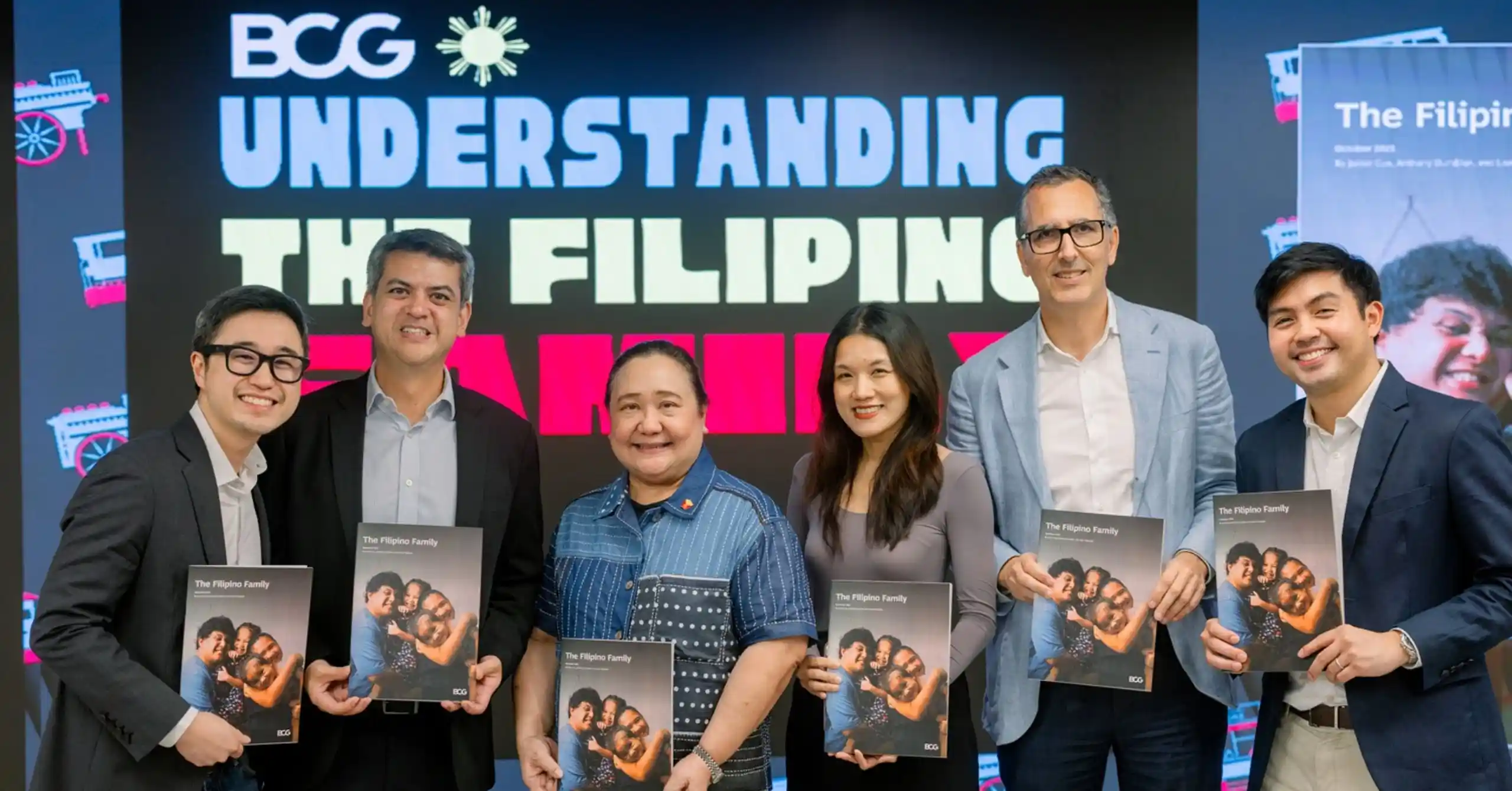
A study released by global management consulting firm Boston Consulting Group (BCG) reveals that the family–not the individual–is the Philippines’ most important economic and emotional unit. This underscores the value of understanding family dynamics when designing products, services, and policies.
The Filipino Family is a comprehensive report examining how Filipino households make decisions, allocate resources, and navigate the tension between daily survival and long-term aspirations. It surveyed 1,515 families representing 6,387 individuals across the country and mapped six distinct family structures. The study unpacks how each family navigates financial decisions, manages shared resources, and makes trade-offs between immediate needs and long-term dreams–revealing both the resilience of Filipino households and a persistent gap between how families truly function and how most businesses and policymakers design for them.
“To truly understand the needs of Filipino people, businesses and policymakers must look beyond individual consumers and see the Filipino family as a decision-making unit,” said Anthony Oundjian, Managing Director and Senior Partner at BCG Manila and co-author of the report. “This report provides an unprecedented, data-driven lens into what drives behavior, priorities, and choices across households nationwide.”
Decision-Making as a Collective Act of Care
Across Filipino homes, decisions–whether about groceries, education, or large purchases–are a collective effort. When a decision involves acquiring household essentials like food and home appliances, multiple family members are involved.
“Filipino households are complex, collaborative ecosystems. Understanding them requires moving beyond the individual lens. Whether it’s a purchase, a savings goal, or a family dream, the Filipino approach is always ‘ours’, never just ‘mine’,” explained Julian Cua, Managing Director and Partner at BCG Manila and co-author of the report.
The report also highlights the persistence and evolution of traditional gender roles. Women, in general, typically manage savings and household spending while men tend to be responsible for investments and long-term financing.
Despite this division of labor, decisions are rarely made in isolation. Instead, they are guided by the principle that consulting each other is a form of care.

Health Security: A Primary Concern
According to the study, seven in ten Filipino households have identified “being financially prepared for health emergencies” as one of their top five priorities–surpassing savings, education, and homeownership. The fear is grounded in stark reality: 64% of families are unable to pay a Php10,000 hospital bill without borrowing money or relying on health insurance.
The report cites the top three priorities of Filipino families, namely: financial security for health emergencies (70%), building a large savings fund (68%), and improvement of nutrition and food quality (64%) .
“Families told us repeatedly that getting sick isn’t just a health crisis–it’s a potential financial catastrophe that could undo years of progress,” added Oundjian. “One emergency surgery, one extended hospital stay, and suddenly you’re in debt for years. This fear shapes everything from how families save to what they’re willing to sacrifice.”
Different Family Structures, Different Realities
BCG”s The Filipino Family identifies six primary family structures in Philippine society, each with distinct financial patterns and decision-making dynamics:
● Single-Earner Nuclear Families (representing 20% of all households): One breadwinner shoulders all financial responsibility while the other parent typically manages the household and children, creating clear but often stressful divisions of labor
● Dual-Earner Nuclear Families (23%): Both partners work and practice toka-toka–splitting responsibilities based on capacity and timing, with decisions made jointly and roles continuously negotiated
● Solo Parent Families (14%): One parent navigates the dual demands of earning and caregiving, with time becoming the most precious and scarce resource in the household
● Dual Income, No Kids (4%): Couples enjoying flexibility and building stability before major commitments, often treating pets as family and investing in experiences over obligations
● Sandwich Families (11%): The middle generation simultaneously caring for children and aging parents, managing competing needs across three generations with limited breathing room
● Extended Families (21%): Multi-generational households where responsibilities, childcare, and decision-making are distributed across aunts, uncles, grandparents, and cousins – creating both support networks and complex dynamics
According to Cua, the above-mentioned aren’t simply demographic categories, but unique economic units with varying needs, vulnerabilities, and ways of making decisions.
“A product that works perfectly for DINKs (Dual Income, No Kids) falls flat for a sandwich family juggling three generations. Yet most businesses treat all ‘consumers’ the same way,” he commented.
The report also explores the role of Overseas Filipino Workers (OFWs) in family dynamics. Despite being away, OFWs remain involved in household decision-making. More than half continue to participate in key family matters and contribute as much as three-fourths of household income through remittances.
The contributions of OFWs keep families financially stable through digital channels. However, most business models still overlook the role of OFWs in the economy.
What This Means for Businesses and Policymakers
The Filipino Family underscores the need for companies, policymakers, and institutions to recalibrate how they engage the Filipino market: by recognizing the household as the central consumer and decision-making entity. It lists five key takeaways:
1. The consumer is not an individual but a household coalition
Filipino families make most decisions collectively, yet businesses continue to design banking apps and marketing campaigns for lone decision-makers. This inadvertently creates friction where families crave flow and opportunities to build family value propositions.
2. Health remains the household’s deepest vulnerability
With the knowledge that 71% of families fearing medical emergencies could bankrupt them, health insurance providers must shift from individual HMO plans with dependent add-ons to genuine household coverage that recognizes collective care decisions.
3. Aspirations are modest but symbolize dignity
Filipino families dream of stability, not luxury: better meals, shopping without calculating every peso, a weekend trip together. Businesses that elevate everyday life through accessible quality and transparent pricing will resonate with the target market more than premium positioning and aspirational lifestyles.
4. Household structures shape economics
Single-earner families, dual-earner couples, solo parents, DINKs, sandwich families, and extended households each operate with fundamentally different flows of money, time, and influence–making segmentation by family structure, not just income or age, essential for relevance.
5. Migration reshapes families without breaking them
OFWs remain active participants in household decisions despite physical distance, contributing significant income through digital channels. Remittance systems, banking products, and e-commerce platforms, however, rarely enable distributed decision-making.
Families that opened their homes to the study aren’t asking for drastic change. Instead, they seek systems that do not force them to behave as individuals and products that are compatible with the way they live.
“This study is an invitation to close the gap between what we know and what we do,” said Lance Katigbak, Principal at BCG and co-author of the report.
“We all know families make decisions together. We’ve seen it in our own homes. The question is: why don’t our businesses, our products, our policies operate that way?”
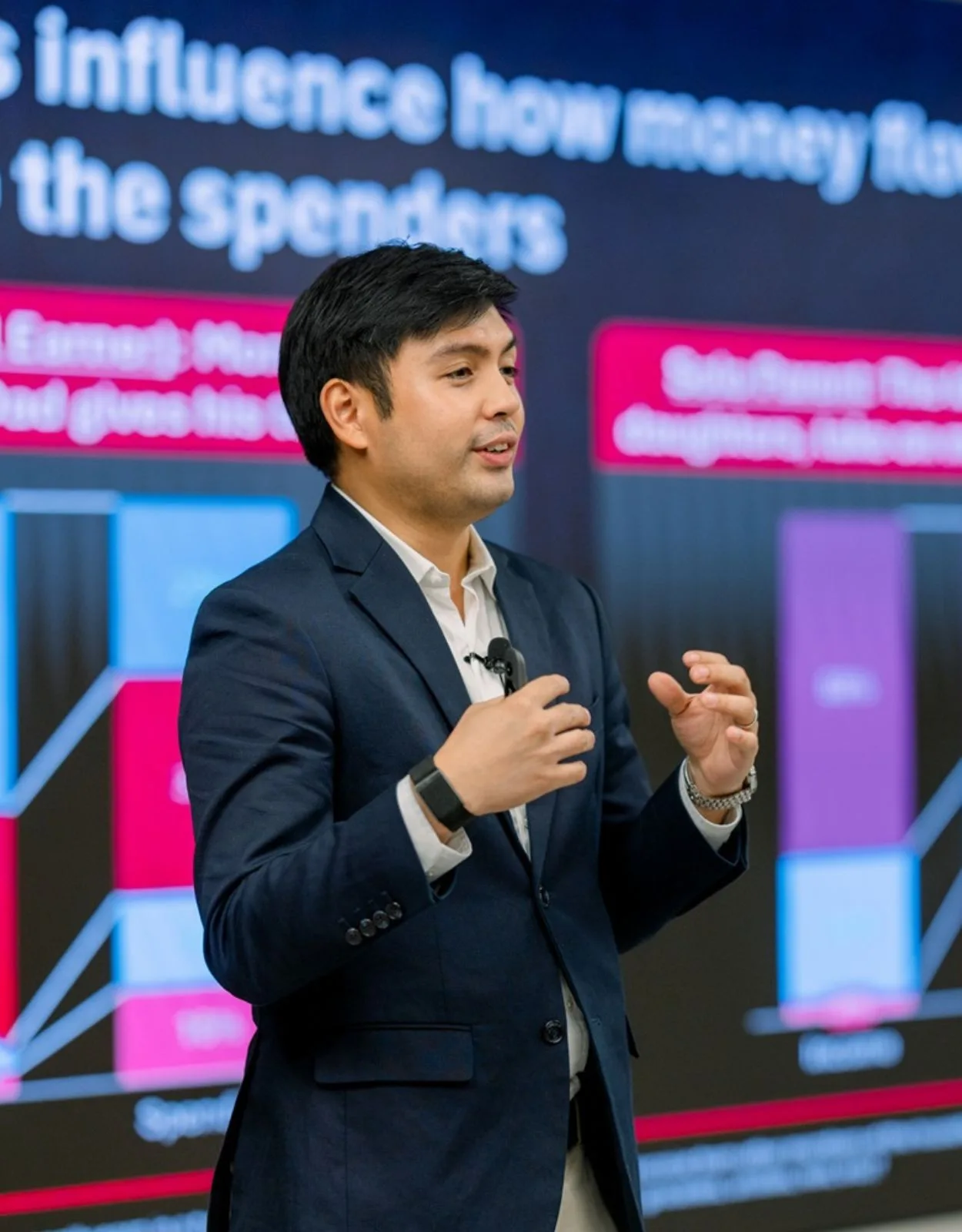
Report findings were presented by BCG leaders and report authors Anthony Oundjian, Julian Cua, and Lance Katigbak. The presentation was followed by a panel discussion featuring business leaders and experts on family dynamics, including Margot B. Torres, Managing Director at McDonald’s Philippines; Paulo Campos, Founding Managing General Partner of Kaya Founders and Co-founder of Zalora; and Lynn Pinugu, Co-Founder at She Talks Asia, who shared insights on the implications of the study for both businesses and households.
The Filipino Family is a continuation of BCG’s ongoing exploration into Filipino values and consumer behavior, following the firm’s previous publications The Filipino Dream (November 2024) and Heart of Hustle: What Fuels the Filipino MSME (May 2025).
The full report is available through this link.