Toyota Looks to Hydrogen Cars for Its Green Future


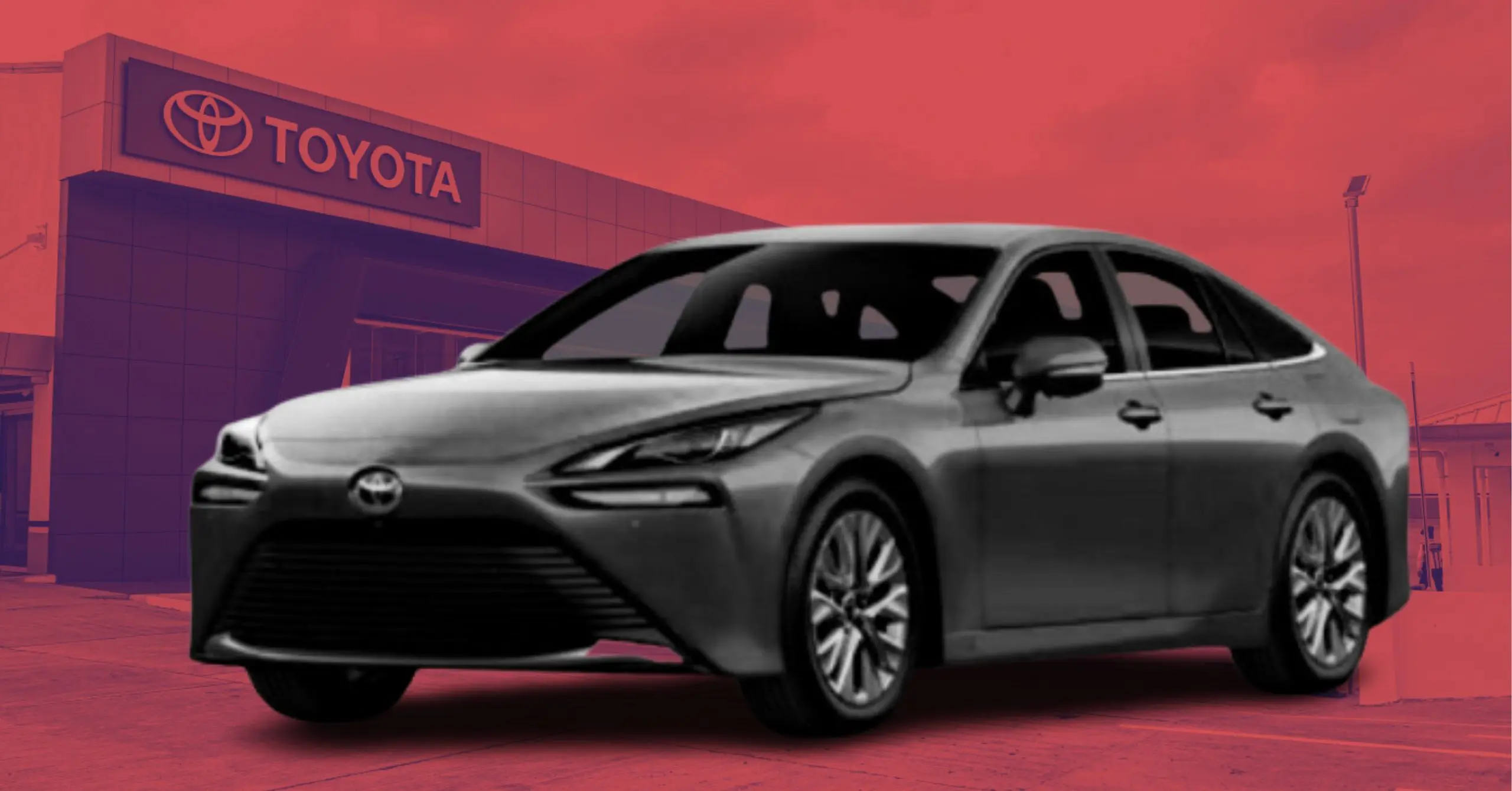
For Toyota, it’s hydrogen cars–not electric cars–that will propel the Japanese car manufacturer into the future.
Just as electric vehicles (EVs) are making a significant impact in the Philippine automotive industry, Toyota has plans to disrupt this trend with hydrogen-powered vehicles. The Japanese car manufacturer believes that hydrogen cars are the future, citing weak demand for its EVs.
Last year, Toyota cut its forecast for EVs by 30%. Instead, the company is backing hydrogen-powered vehicles, recently releasing its hydrogen car, the Toyota Mirai, in California. It is also pursuing a joint venture with BMW to produce powertrains for hydrogen vehicles.
The Hydrogen Future
Hydrogen cars combine their fuel, hydrogen, with oxygen in the air to produce energy. This process has one by-product: H2O or water.
Hydrogen, unlike fossil fuels, is available abundantly, particularly in water. However, hydrogen cars don’t actually use water. Instead, they use hydrogen fuel cells, which are produced by extracting H2 from H2O through a process called electrolysis.
Toyota envisions a future where hydrogen cars are refueled with its hydrogen fuel cells in stations similar to EV charging stations or gasoline stations.
The Toyota Mirai
Toyota has been pursuing hydrogen-powered vehicles since as early as 2010 when it released its first hydrogen fuel cell vehicle called the Mirai (the Japanese word for “future”).
In 2025, Toyota released the Mirai in the California market.
The company also presented a hydrogen-powered vehicle concept to President Ferdinand Marcos Jr., when it showcased its new Tamaraw EV earlier this year.
Criticisms of EVs
How Green Are Electric Vehicles?
Electric vehicles–while they also produce zero emissions from the vehicle itself–are only as clean as the grid that powers them.
For example, while the Philippines generates power from geothermal sources and is increasingly shifting towards renewable sources, the lion’s share of power generation still comes from coal, one of the most environmentally harmful sources of energy. If you are powering your car from the grid, electric vehicles thus shift energy emissions from gasoline to mostly coal sources.
The Problem with Cobalt
In addition, cobalt is a key component in many EV batteries, and it faces many criticisms regarding both environmental and ethical issues related to its mining. Not only is mining of cobalt energy-intensive and destructive to the environment, much of cobalt supply comes from the Democratic Republic of Congo where the country’s mines are rife with human rights abuses and child labor.
Challenges for Hydrogen Cars
Toyota has many hurdles to clear before it can roll out its Mirai to the world. The first involves the production of H2. Toyota claims to have solved some of the problems with a new process that salvages boiled off H2 gas for use in hydrogen fuel cells.
Even with H2 production solved, Toyota will still need to create a network of hydrogen refuelling stations, similar to the growth of EV charging stations around the metro. In answer to this challenge, Toyota has invented hydrogen capsules that can be used in fuel cell vehicles, though, clearly, the road ahead is a long one.
The Future of Toyota’s Growth
According to Toyota CEO Akio Toyoda, the electric car segment will only ever account for a maximum of 30% of the market. Given this, he sees hydrogen cars as the future for Toyota. On the environmental front, Toyota sees CO2 as the real enemy, and–if Toyota can overcome the challenges ahead–it is here where hydrogen cars can truly make a difference.