This Girl Boss Turned Php500 Into a Faux Fur Business Earning 7 Digits Monthly



It’s Faux owner Jenn Lim shares how her faux fur brand grew from humble beginnings into a successful business across multiple e-commerce platforms.
Businesses, whether big or small, always begin somewhere. Some businesses are initiated because their owners had always wanted to have businesses of their own. Other businesses are born to address a need, such as the need to earn additional income or to pursue a specific passion.
Then, there are those businesses that are the result of something completely accidental. Their owners didn’t fully intend on starting a business, but on some random, ordinary day, an opportunity presented itself, and the rest was history.
This is exactly how online faux fur business It’s Faux Philippines came to be. With Php500 that its owner never intended as business capital, It’s Faux has since grown to become a business that earns seven figures monthly.
Owner Jenn Lim spoke to The Business Manual to share her entrepreneurial journey and how she grew It’s Faux into a successful business that continues to flourish on e-commerce platforms such as Shopee, Lazada, and TikTok.
How It’s Faux Was Born
Lim grew up in a business-oriented environment thanks to her family’s businesses, and she went on to eventually take up a BS Entrepreneurship course in University of Santo Tomas (UST). While in school, she ran an online thrift shop where she sold ukay-ukay clothing at a premium. She used what she earned to buy more stocks, while some of her earnings went to her leisure budget.
“I guess growing up in an environment with a background in business, I’ve always known I’d want something similar to what I was accustomed to,” she says about being surrounded by business all her life.
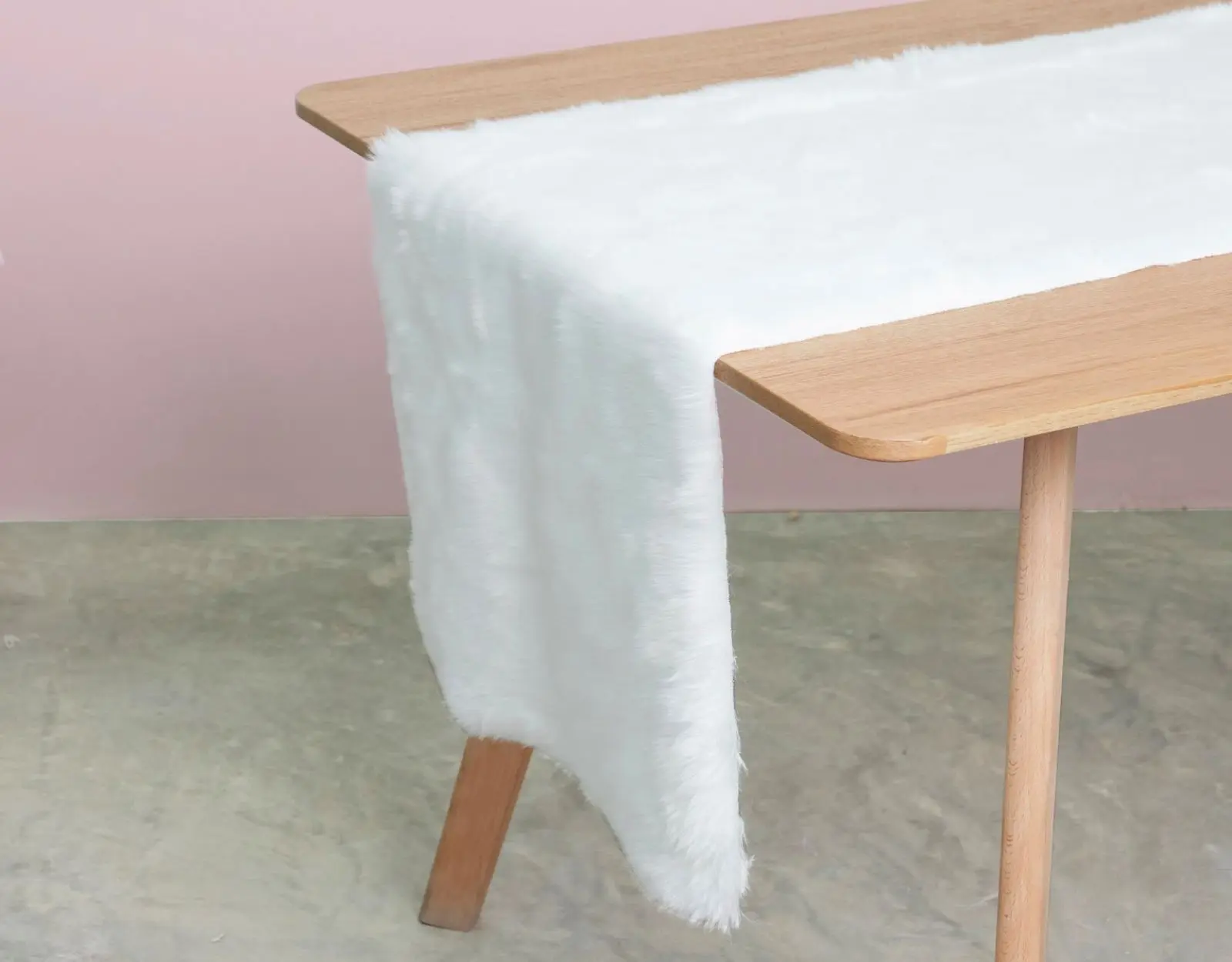
While business is in her blood, Lim did not start It’s Faux because she was aiming to start a new venture at that point in time. The roots of It’s Faux were planted when she noticed on a random day in 2017 that one of her tables had scratches and signs of wear and tear that she wanted to cover up.
Wanting to add more personality to her living room, she went to a fabric store and bought fur fabric for Php500, which already included transportation cost. She went home, put the fabric on the table, and ended up being happy with how it looked. Realizing that the piece of fur she had wasn’t enough to cover up more counter space, she wanted to buy more.
“Since the fabric store that sold it was not easily accessible, I tried looking it up online, and I couldn’t find even a single one,” she recounts. Then came the lightbulb moment. It made her think that maybe she can sell fur fabric herself.
“Maybe there are girls like me who experience the same tiny problem that I could help solve with a tiny fix. In less than five minutes, I created the Instagram page,” she reveals. “All within that time frame, I thought of a brand name–IT’S FAUX. I am a pet lover through and through, so I wanted to deliver the message that what I’m selling is fake fur and not real animal fur, thus the straight-to-the-point brand name.”
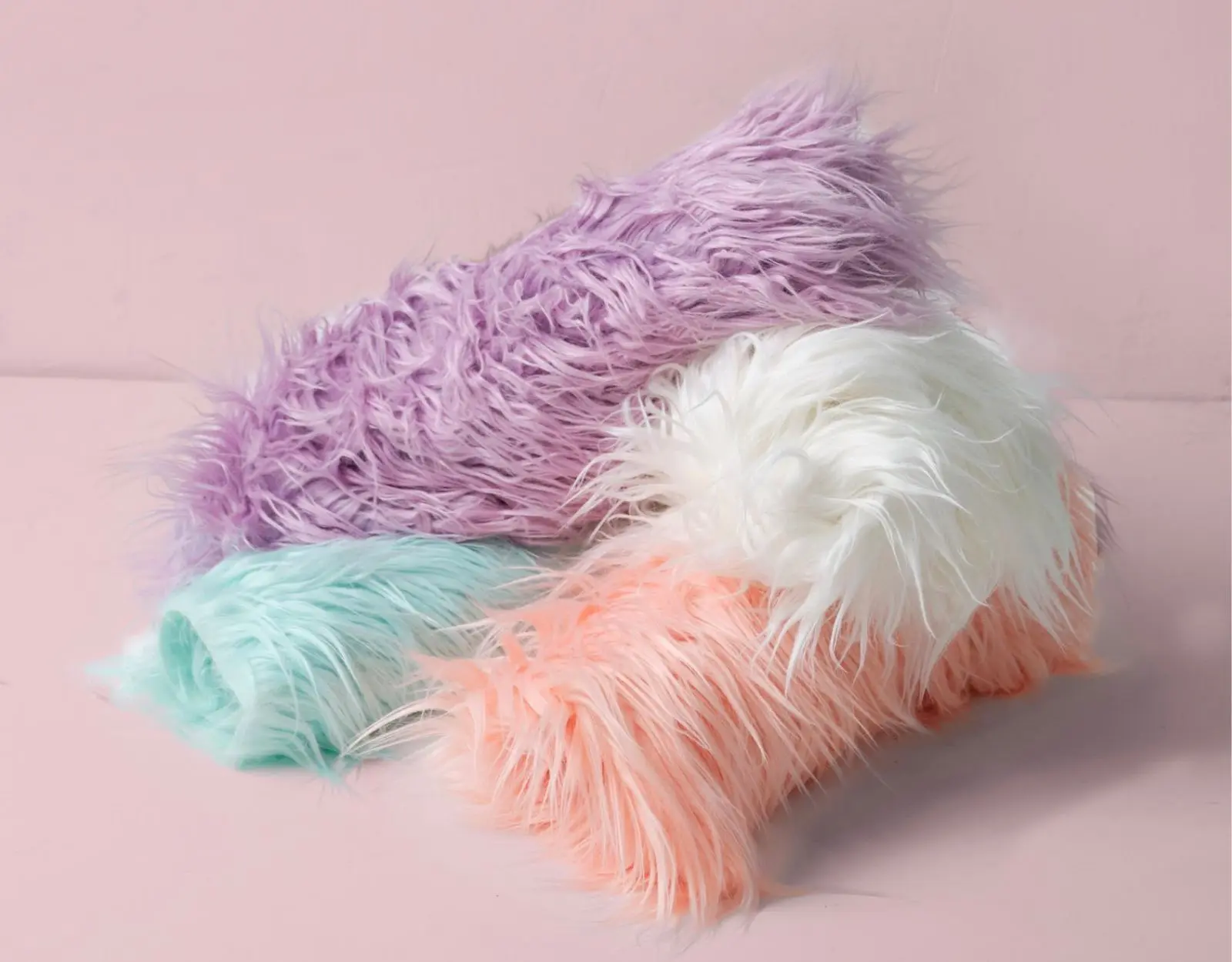
Then what did she do? She took the fur off the table top, cut them into smaller pieces, took photos, and sold them online.
“I made my first sale on the very first night,” Lim says proudly.
Starting Small but Colorfully
According to Lim, selling fur via e-commerce was something that was pretty new when she was starting out, which meant “the market was very responsive to pre-orders.”
“So I was operating under every purchase made and then some until I was able to save enough capital to move out of the pre-order game, which happened in two months’ time,” Lim recalls.
“And then I started buying a few pieces of fabric which served as my initial on-hand stocks. It went on like that until I could fill an entire six-layer shelf with fur fabrics, then until I could fill up the entire truck with rolls of fur fabric,” she adds. “Just like in college, I was religiously turning every profit into capital for stocks until it grew exponentially.”
Wanting It’s Faux to stand out and be more than just a fabric store selling fake fur, Lim was determined to make her business fun and versatile but quirky and fancy at the same time.
“So I played a lot with colors, and made the branding a little more playful than your usual fabric store,” she points out.
Going Big and Bold
With the tagline “All Things Fur,” Lim wanted her brand to sell everything that would look nice in fur. While the business started by just selling plain fur fabric, she went to offer other products, such as fur table runners, fur rugs, fur mats, fur coasters, Christmas fur skirts, fur socks, fur bags, fur scrunchies, and the list goes on.
“They could initially be just looking for a piece of fur to cover an old furniture but end up getting a fur rug, fur coaster, and fur blanket too,” she says.
But the next big product she eventually added, according to Lim, was actually due to a demand from her customers, who wanted a fur shawl. She admits she didn’t expect she’d be selling fur shawls given the Philippine weather, but out of every 10 inquiries she was getting, eight would be asking for a fur shawl.
“I responded with a new product introduction, and they loved it,” she reveals. “Now, the fur shawl is one of the most-ordered products from It’s Faux.”
Today, It’s Faux has sold more than 600,000 pieces of unique fur products across platforms, including home and living decor, fashion, crafting supplies, and even photoshoot backdrops.
The Struggles Along the Way
The growth of It’s Faux took place at an impressive pace as, according to Lim, the brand was able to earn seven digits monthly after two years. However, its growth also came with a series of challenges.
To start with, Lim launched her business while still working full-time, which meant she had to juggle both her career and a growing brand at the same time.
“It was a really tough spot to be juggling two things since I would arrive home at around 9 p.m., and I wouldn’t be able to rest because I had to spend the rest of the night packing orders for next day’s pick up,” she recalls. “It went on like that for like six months until it felt like I had to give up my day job. My business was stuck at a point where I was merely just selling, and nothing new was coming in. Sales were the same every single day. It wasn’t going up. and down. It is never a good thing.”
“I couldn’t work on my brand’s full potential while working for another business at the same time. Letting go was a huge step because I just started working, barely making a dent in the corporate scene, and quitting my job would only mean that I will no longer have passive monthly income, but I still took the risk and ran with it,” she adds. “A month after taking the risk, my sales doubled and it was going on an upward trend. All I needed to do was to focus on my business.”
The Advantages of Being Online
Just three years after It’s Faux’s launch came the COVID-19 pandemic that shattered many businesses in the Philippines. For It’s Faux, however, this period proved to be beneficial for the brand as many Filipinos preoccupied themselves with decorating their homes.
“This was the rise of the Home Buddies group page on Facebook. People started forming communities and threads on how to make their work-from-home set-up conducive for work,” Lim remembers. “Everybody just started to get into plants, room renovations, furniture, and all the desk essentials we can think of. Fur became a top-of-mind decor when it comes to making every working girl’s dream space.”
As her products were available online during a time when brick-and-mortar stores were not allowed to operate, It’s Faux’s scales skyrocketed. For Lim, operating online means she gets to enjoy the advantage of having a bigger audience reach.
“Imagine being able to market your products to a thousand more people every day,” she points out. “It’s definitely growing the chances of purchase conversions to a higher rate.”
“Aside from it’s a cost-efficient way to start and maintain a business, I have the entire Philippines as my potential reach for brand awareness and potential sales,” the It’s Faux owner adds. “It’s like a boundless marketplace where shelves know no limits. With the right selling platforms, I could be getting orders while I’m asleep, simply because the store never closes. It’s up 24/7 with just a click away.”
For Lim, being an e-commerce business also offers a convenient buying experience for customers because they no longer have to leave their homes just to make a purchase. She regards this as “definitely an advantage for both the brand and the customers.”
The Downside of Being Available Online and Nowhere Else
Despite the advantages of running an e-commerce brand, Lim acknowledges that there are drawbacks to her choice not to open a brick-and-mortar store.
“E-commerce businesses definitely cannot provide a tangible experience for everyone. By solely looking at product photos, it is definitely going to be a hit or miss when it comes to customer preferences,” she says.
“It is something we deal with day to day, trying to explain the look and feel of fur fabric to our customers who need a little more help visualizing our products.”
Given the lack of tangible experience, she acknowledges that she cannot provide her customers instant gratification either.
“We have customers who need it right away but have to wait a few business days for it to arrive,” Lim explains. Although we offer same-day delivery via third-party couriers, not everybody resides in the Metro to be able to receive the product on the very same day they need it.”
Lim also notes that the fierce competition online has become a challenge for her, given how prices of products are out in the open for the target market to see.
“It’s a compelling scenario, especially when competitors tend to go on a price war and customers tend to be price-sensitive,” she points out. “It might end up hurting your product margins and overall costings.”
Should Aspiring Business Owners Go for a Purely Online Brand?
While Lim says that going purely online “definitely requires minimal commitment when it comes to capital,” she believes that “just because it’s easy does not mean everyone should do it.”
“E-commerce is still a game where one wins and the other one loses,” Lim notes. “If you plan to go in, you have to be prepared for a lot of things–these things don’t require money, but they require time and effort on your end.”

“E-commerce is definitely not for the weak soul; thus, it’s not for everyone,” she adds. “While e-commerce has an increased reach potential, which is ideal in business, if your product is nothing new, you’re bound to sell beside bigger competitors with better selling prices. So if and when you decide to launch an online business, conduct product research and determine if there’s a demand for it that’s worthy of your time and effort moving forward.”
For aspiring entrepreneurs who want to open a business that’s purely online, Lim offers the following tips:
Know Your Target Market
First, Lim emphasizes the importance of identifying and understanding the target market a business wants to cater to.
“This is something I preach very profoundly because it takes on a crucial role to the growth of any business,” Lim says. “Do some market research and triple check who you think you should be selling your products to.
Have a Strong Branding
After establishing the target market, the next thing to focus on is branding. Lim cautions against overlooking this aspect and making the mistake of thinking that simply selling is enough.
“Strong branding takes an active role in naming your price,” she explains. “The stronger the brand, the more you have control over the price. Branding comes in like a trust bar built around every product that is sold in your store. And with strong branding, you create loyal and repeat customers who resonate with your brand, regardless of the price.”
Set Your Goals
In business, it’s important to think of what you want your brand to be in the coming years in order to scale. According to Lim, it’s important to create thresholds and goals, as well as to make every small win count.
“Setting a goal is as important as building a strong brand. Celebrating wins, big or small, for your business would help you reach closer to the goals you set for your business,” she reminds. “If your goal is to sell 100,000 units in your first year of business, write it down and build a step-by-step checklist and plans leading up to your goal. You will find yourself a day closer to it every time you tick something off your checklist.”