Business & Biodiversity: Tubbataha Reefs’ Model for Responsible Tourism


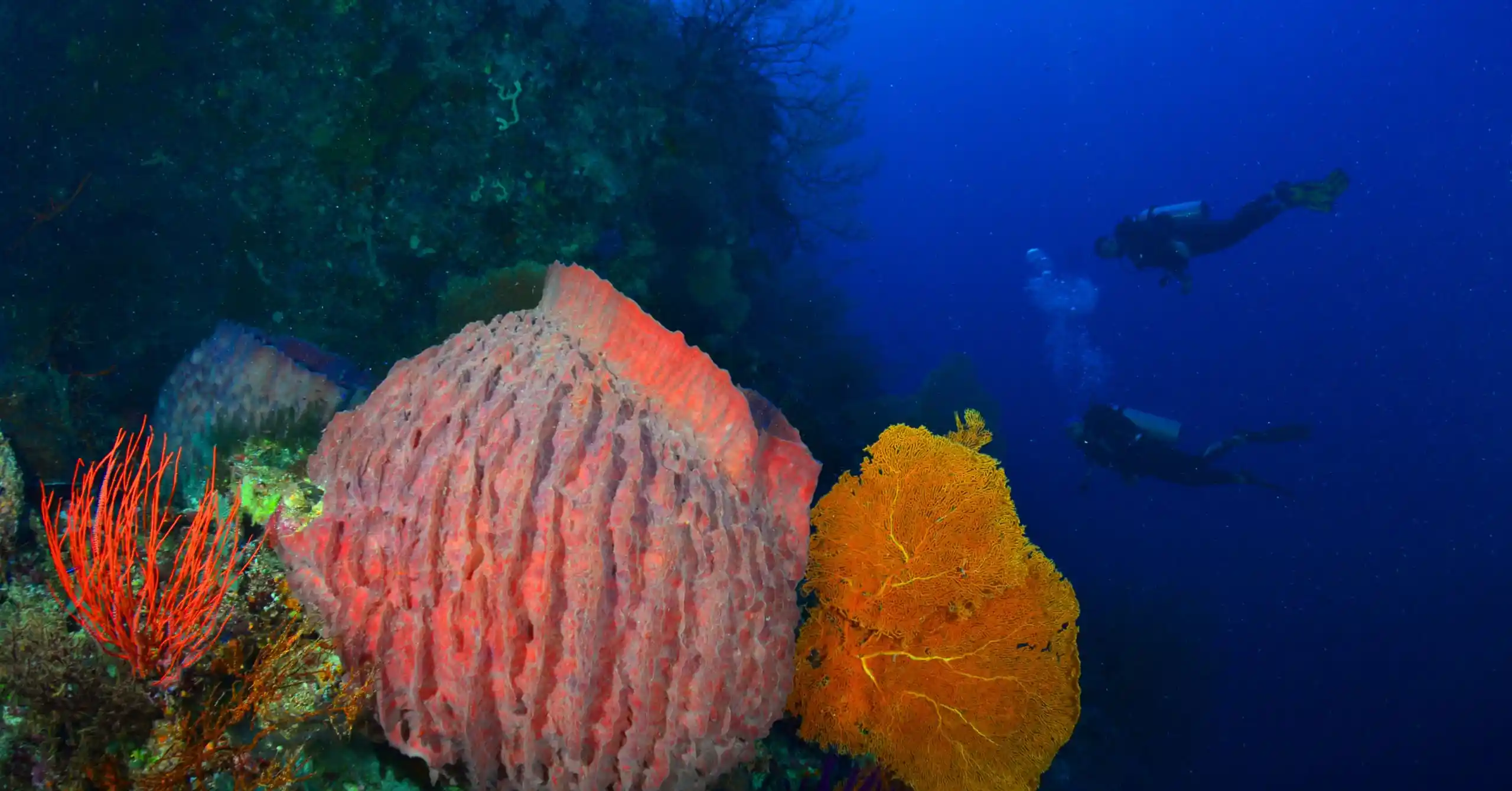
How can the tourism sector help care for the environment? Tubbataha Reefs’ Angelique Songco weighs in.
With over 7,600 islands and a plethora of natural attractions, the Philippines draws in millions of tourists each year. In 2024 alone, 5.9 million tourist arrivals were recorded. Among the country’s most famous and frequently visited natural wonders is the Tubbataha Reefs Natural Park, a UNESCO World Heritage Site. And at the forefront of the efforts to preserve and protect the Tubbataha is its Protected Area Superintendent, Angelique Songco. Songco, also affectionately referred to as “Mama Ranger,” has devoted 25 years of her life to the reefs.
To mark World Tourism Month, The Business Manual spoke to Mama Ranger to gather insights on the efforts to protect the Tubbataha and how tourism businesses—and Filipinos in general—can be more ethical, sustainable, and environment-friendly.
Tubbataha’s Present Condition
The Tubbataha is home to more than 1,200 marine species, including marine mammals, seabirds, sea turtles, and fish. It attracts approximately 1,200 visitors, particularly divers, yearly.
Only 15 dive boats are allowed to operate in the Tubbataha during the scuba diving season, which takes place from March to June. It is but one of the restrictions in place to help protect the reefs.
Such restrictions, however, are not enough to protect the reefs. The Tubbatha’s caretakers still collect a huge amount of plastic waste in the area despite its isolation. A recent cleanup activity, held last August, collected 21 kilograms of plastic bottles and 9 kilograms of plastic footwear.

“There does not seem to be any letup in its use, and marine protected areas like ours, or those nearer to shore, are suffering from the influx of marine debris,” says Songco. “Not only is it unsightly; it also affects wildlife, especially when they break down into smaller pieces.”
The Tubbataha has also been losing coral cover and fish biomass over the last few years.
“This is believed to be due to natural causes, such as bleaching, warming waters that cause fish to migrate to deeper depths, and more frequent and intense typhoons that cause coral damage, among others,” she explains. “Nevertheless, Tubbataha still maintains the highest fish density in the country and a high coral cover. It is still as beautiful as ever!”
Tubbataha as a Tourist Destination
Limiting the number of dive boats has helped protect the Tubbataha. Moreover, dive operators need to secure licenses and permits even before they can operate.
“We require the submission of documents issued by relevant government agencies. We charge conservation fees and vessel entry fees. Permitting is generally online, and so is payment of the fees,” says Songco.
Dive boat operators, according to Songco, have been very supportive of conservation initiatives.
“We maintain open lines of communication with them throughout the year and inform them of management activities and research findings,” she adds. “They are our partners in conservation and they are very helpful to park authorities.”
Songco also notes that the dive boat operators themselves implement and uphold park rules, especially since they deal with tourists directly.
“Our sectors both know that if unsustainable tourism practices ruin Tubbataha, we will lose this valuable resource,” she points out. “Hence, we work closely together to make it work!”
Is Present Legislation Enough?
Also vital to Tubbataha’s protection is Republic Act 10067 or the Tubbataha Reefs Natural Park (TRNP) Act of 2009. Aside from establishing the Tubbataha as a protected area, the law also lays out the strategic management plan (SMP) for its management.
While the law is adequate to protect the park, Songco says it lacks a few salient points.
“There is adequate room within the law to formulate additional regulations, if necessary. What is missing in RA 10067 is guidance on the mother unit of the Tubbataha Management Board.”
She adds, “Like all Philippine laws, it is the implementation that is crucial for us to enjoy the benefits of such legislations.”
Ethical, Sustainable Tourism
As the Philippines continues to gain recognition for its world-class dive sites and natural attractions, the call for more sustainable and ethical tourism practices grows stronger.
Songco defines sustainable tourism as “travel with the earth in mind, being fair and respectful of communities visited, and supporting eco-friendly tourism suppliers.”
While many businesses, particularly in the tourism industry, have been developing innovative eco-friendly practices, Songco notes that being ethical and sustainable can start with small practices.
“Many small practices are kind to nature,” she points out. “Most hotels provide information that encourages guests to reuse their towels, but they automatically change them daily anyway. Mineral water bottles are provided in the rooms, whether you want them or not. There is much talk of green hotels, but hardly any practice there.”
Songco also emphasizes that tourism businesses have the obligation to learn more about nature so that “we do not become the problem.”
“Tourism in the Philippines relies heavily on the condition of its natural environment. Those in this business need to educate themselves,” she says. “I find it most appalling when resort owners cut down every tree on their property and then fashion concrete infrastructure to resemble trees, right down to the peeling bark. It is much cheaper to leave nature alone than to create it artificially—it is just so tacky!”
What Caring for Nature Requires
This World Tourism Month, Mama Ranger reminds everyone that caring for nature is a shared responsibility.
“Not only when we travel, but also in our daily lives,” says Songco. “Caring for nature requires inconveniences and sacrifices. It is more convenient to buy mineral water than to bring your own tumbler.”
Songco also points out what she calls shallow commercialism and how it is “trashing” the planet.”
“We buy stuff left and right without thinking where they will end up after we are done with them,” she says. “But shallow commercialism is not an abstract concept, it is us, our habits, our choices, our convenience.”
Drawing inspiration from one of musician and recording artist Carlos Santana’s songs, Mama Ranger shares advice to fellow Filipinos. “If we want to protect our beloved places, we’ve got to change our evil ways.”
Featured image credit: Yvette Lee
Read more:
Does Panglao Have What It Takes to Be the New Top Destination of the Philippines?